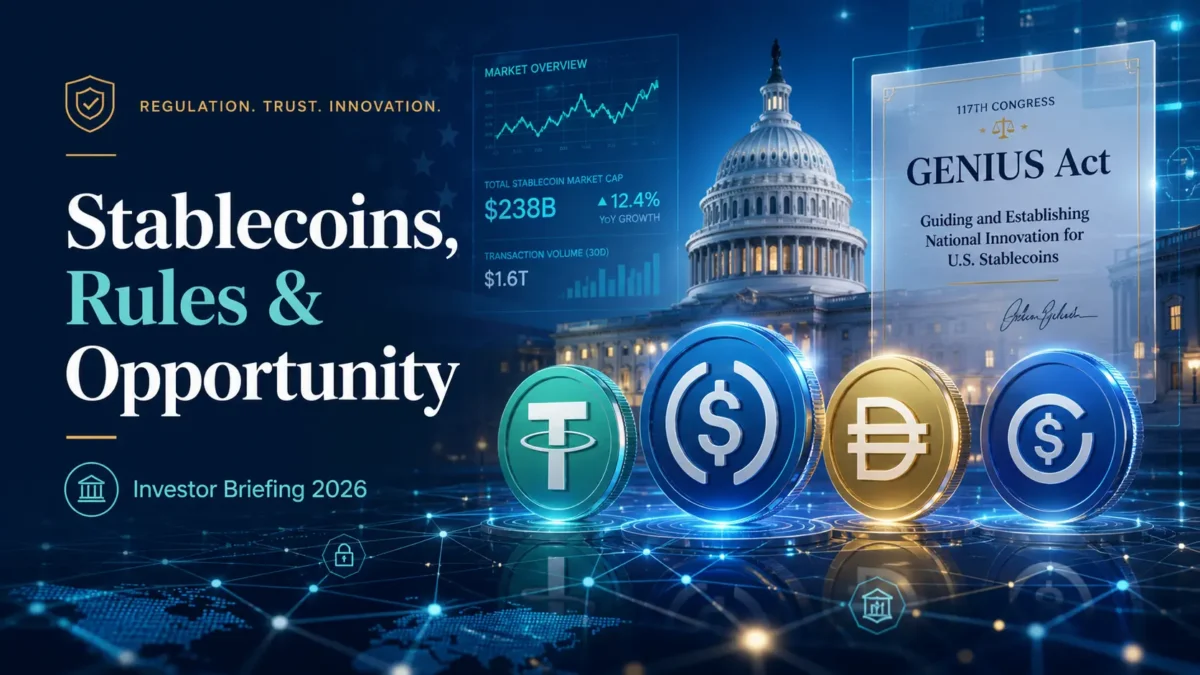
For a decade, stablecoins lived in a regulatory grey zone — too small to matter, too obscure to legislate, too useful to ban. That era is over. The global stablecoin supply has now passed $300 billion, and in July 2025 the United States passed the first comprehensive federal law to govern them. The GENIUS Act has spent nine months reshaping how every major stablecoin issuer, bank, and fintech operates — and the rulemaking is still being written as you read this.
If you hold USDC, trade with USDT, earn yield on sUSDS, or simply care about where the digital dollar is going, this is the most important regulatory shift of the cycle. It is bigger than any single coin price, and it sets the rails on which the next decade of crypto and traditional finance will run together.
This guide explains what the GENIUS Act actually says, how the OCC, FDIC and Treasury are turning it into binding rules in 2026, who wins and who loses, how it interacts with Europe's MiCA framework, and — most importantly — how to think about stablecoins inside a serious investment portfolio. It is the natural next step after our piece on Central Bank Digital Currencies (CBDCs) and our coverage of Initial Coin Offerings, and it pairs especially well with our deep dive on AI Trading Agents — because most of those agents settle in stablecoins.
The Guiding and Establishing National Innovation for U.S. Stablecoins Act — the GENIUS Act — is the first federal U.S. law to create a complete regulatory framework for payment stablecoins: digital tokens pegged 1:1 to the U.S. dollar and used for payments, settlements, and on-chain finance.
The law mandates one-to-one backing in U.S. dollars or other low-risk reserve assets, and it was introduced by Republican Senator Bill Hagerty in May 2025 as a bipartisan effort to bring stablecoins under federal supervision.
The political path was unusually fast for a bill of this scope. The Senate cleared the bill 68-30 in June 2025 and the House passed it 308-122 the following month, with the President signing it into law shortly after. Both chambers reached supermajority levels — a rare signal that the U.S. political system, after years of crypto policy paralysis, has finally landed on a workable consensus for the simplest, most useful corner of the digital asset universe.
The headline of the law is what it does for legal clarity. For the first time, U.S. federal law specifies which entities are permitted to issue payment stablecoins, what assets must back those tokens, and which regulators are responsible for supervision. Just as importantly, the Act removes compliant payment stablecoins from the federal definitions of "security" and "commodity" — a jurisdictional shift that takes the SEC and CFTC out of the picture for compliant issuers and puts banking regulators firmly in charge.
If you have followed crypto for any length of time, you understand why this matters: the single biggest source of operational risk for stablecoin businesses since 2018 has been jurisdictional ambiguity, not technology. The GENIUS Act collapses that ambiguity into a coherent rulebook.
It is worth pausing on the scale of what is being regulated, because the numbers have moved dramatically.
The stablecoin market closed Q1 2026 at a record level. While the broader crypto market lost more than 20% of its value in early 2026, the stablecoin sector pushed to a record total market cap above $315 billion. By mid-April, total dollar-backed stablecoin supply has climbed past $320 billion, with USDT representing roughly 58% of the total and USDT plus USDC together accounting for about four-fifths of the entire market.
Activity has scaled even faster than supply. Q1 2026 stablecoin transaction volume reached $28 trillion — a 51% jump from the prior quarter and an all-time high. To put that figure in perspective, it dwarfs the annual transaction volume of major card networks. Stablecoins are no longer a crypto-trading sideshow — they are payments infrastructure.
The composition of the market is also shifting. Tether's USDT supply contracted by roughly $3 billion in Q1 2026 — its first quarterly decline since 2022 — while Circle's USDC added about $2 billion to reach $78 billion, driven by institutional demand for regulated assets. The compliance-first issuer is gaining share precisely as the new regulatory regime takes effect — which is exactly what you would expect.
There is one more data point worth internalizing because it explains why Washington moved so quickly: stablecoin issuers now sit among the top ten holders of U.S. government debt, ranking seventh by purchase volume. Stablecoins, in 2026, are not a side bet on crypto. They are a structural buyer of U.S. Treasuries and a key piece of dollar policy abroad. That is the political backdrop the GENIUS Act was written into.
Underneath the political branding, the law is a tight piece of prudential regulation. Here is what it actually requires.
The Act defines a category of permitted payment stablecoin issuer (PPSI) and limits stablecoin issuance to entities that fit within it. In practice, an issuer must be one of three things: a subsidiary of an insured depository institution (a bank or credit union), a federal-qualified nonbank approved by the OCC, or a state-qualified issuer operating under a certified state regime — but only up to a $10 billion ceiling. Once a state-qualified issuer crosses the $10 billion threshold, it has 360 days to either move to the federal regime or secure a waiver to remain at the state level.
This structure is important because it deliberately preserves a path for state regulators (for example, the New York Department of Financial Services) to remain relevant for smaller issuers, while pushing systemically important issuers into a single federal regime.
The reserve requirements are unusually strict by financial-regulation standards. Permitted reserve assets are limited to U.S. dollars, Federal Reserve notes, deposits at certain regulated institutions, short-term Treasuries, Treasury-backed reverse repos, and money market funds.
That list deliberately excludes corporate paper, longer-duration bonds, and any form of credit risk. The model is a narrow-bank-style instrument: a digital dollar backed by the safest, most liquid assets in the world. The reason for this strictness is the ghost of TerraUSD — the algorithmic stablecoin whose 2022 collapse wiped out tens of billions and made "fully reserved in liquid assets" the only politically viable design.
The law also bans issuers from paying interest directly to stablecoin holders. The yield prohibition applies to issuers themselves but does not explicitly close the door on affiliate or third-party arrangements that might offer interest-bearing products.
This is one of the most consequential — and most debated — provisions of the law. The intent is to protect bank deposits: if regulated stablecoins paid 4% interest while checking accounts pay 0.1%, retail money would migrate fast. The unintended effect is a massive opening for yield-bearing stablecoin wrappers issued by third parties, which is exactly where most of 2026's growth is now concentrated. We will come back to this.
The White House Council of Economic Advisors actually weighed in on the yield ban in April 2026, concluding that the policy effect is muted. Even under stacked worst-case assumptions, the model produced only $531 billion in additional bank lending — about 4.4% of total loans — and only if stablecoins grew sixfold relative to deposits while reserves were forced into unlendable cash and the Fed abandoned its current framework. Translation: the bank-lobby case for the yield ban is weaker than its supporters claim, and the rule is likely to evolve.
For users, the most important provisions may be the consumer protection rules. Holders are guaranteed an enforceable right to redeem stablecoins for fiat on demand, and issuers must publish redemption policies in plain language with disclosed and capped fees that cannot be raised without seven days' notice.
For the first time, a U.S. stablecoin user has a legally enforceable right to get their dollars back. That is a foundational change.
The law also addresses foreign issuers explicitly. Foreign-issued stablecoins can reach U.S. users through digital asset service providers, but only if the Treasury determines that the home jurisdiction enforces comparable regulations.
This is the provision that puts Tether (USDT), the market leader, in a complicated position. Under the new framework, Tether would need either a U.S. banking license or a partnership with a licensed entity to legally serve American users — a hurdle that may push the company further toward non-U.S. markets.
In other words: the GENIUS Act does not ban USDT, but it raises the bar to a level that may make U.S. operations uneconomic. Tether's recent strategic moves — strengthening its emerging-markets payments footprint, increasing reserve transparency, exploring U.S.-compliant issuance partners — all need to be read through this lens.
Passing the law was step one. Turning it into binding rules is step two, and that process is happening right now — which is why this is such an important moment for any investor with stablecoin exposure.
The Act assigned implementation to multiple regulators, with the OCC as the primary federal payment stablecoin regulator for nonbank issuers and bank subsidiaries, and the FDIC for insured-depository-institution issuers. The timeline runs as follows:
February 25, 2026 — OCC proposes its rule. The OCC issued a notice of proposed rulemaking covering payment stablecoin issuance and related activities for entities under its jurisdiction, with most of the new requirements being filed in a brand-new section of federal regulation, 12 CFR 15. The proposal applies to national banks, federal savings associations, federal-qualified nonbank issuers, foreign issuers under OCC oversight, and certain state-qualified issuers — essentially the bulk of the U.S. stablecoin perimeter.
April 10, 2026 — FDIC publishes its proposal. The FDIC's proposed rule covers FDIC-supervised stablecoin issuers and depository institutions, addresses how deposit insurance applies to stablecoin reserve assets, and clarifies how tokenized bank deposits should be treated, with public comments due by June 9, 2026. That last point — the treatment of tokenized bank deposits — is one of the most important undercovered details of the entire framework.
Treasury, FinCEN and OFAC — the AML/sanctions layer. Treasury, FinCEN and OFAC have issued a joint proposed rule implementing the Act's anti-money-laundering and sanctions compliance program requirements, designed to support innovation while limiting illicit-finance risks. Stablecoin issuers will be treated as financial institutions for Bank Secrecy Act purposes, which is a major compliance lift but exactly the kind of bank-equivalent supervision the law was designed to deliver.
The deadline that matters most. The Act takes effect on the earlier of two dates: 18 months after enactment (which fixes a backstop in mid-January 2027) or 120 days after the primary federal regulators finalize their implementing rules.
Implementation has not been entirely smooth. In late April 2026, a coalition of bank trade associations asked the Treasury to extend public comment periods for several stablecoin rules, arguing that work at FDIC and Treasury depends on an OCC rule that is not yet finalized. Behind that procedural request is a real tension: banks want stablecoins regulated as banks, while crypto-native issuers want a tailored regime that respects the operational differences. The final rules will sit somewhere between those poles, and serious investors should track the comment letters being filed at the OCC and FDIC.
Big regulatory shifts redistribute value. The GENIUS Act is no exception, and the early data already shows the redistribution underway.
Circle has been preparing for this regime for years. USDC was already aligned with MiCA's e-money token standards in Europe and was designed from the start to meet GENIUS-style reserve rules, leaving Circle the most lightly disrupted of the major stablecoin issuers — its reserves are concentrated in short-dated U.S. Treasuries and cash held at regulated institutions.
The market is rewarding the positioning. Circle's USDC supply has expanded by 220% since late 2023 to roughly $78 billion, including a $2 billion gain in Q1 2026 alone, and USDC now drives close to 80% of total stablecoin transaction volume and 85% of bot-driven activity. Major payment platforms are actively migrating volume into USDC because of regulatory credibility.
For investors: USDC is now positioned as the default institutional stablecoin in the U.S. market. That does not mean the price moves — it is, by design, $1 — but it does mean Circle's franchise value, integration depth, and pricing power are climbing.
USDT remains the global volume leader, but its U.S. positioning is now openly contested. The trajectory is clear: Tether is consolidating its emerging-markets dominance — payments, FX-substitute, on-ramp/off-ramp in countries with weak banking infrastructure — while ceding U.S. on-chain volume to USDC and the new yield-bearing entrants.
This is not necessarily bad for Tether's business. The emerging-markets opportunity is enormous. But it does mean U.S. users should expect USDT to become progressively less integrated with U.S. financial rails.
Here is where the story gets interesting. Because the GENIUS Act bans direct yield from issuers but leaves third-party arrangements alone, an entire new product category has exploded in 2026.
Yield-bearing stablecoins drove more than half of net stablecoin supply growth in Q1 2026, expanding 22% during the quarter and adding around $4.3 billion in market cap, with USDY in particular jumping 150% and sUSDS pulling in more capital than the next four yield-bearing tokens combined.
The mechanic is straightforward: a non-yield-bearing GENIUS-compliant stablecoin sits at the base, and a wrapper or sister token captures the Treasury yield from the reserves and passes it on to holders. Regulators are watching this closely. Some variants of follow-on legislation (the CLARITY Act in particular) may close the loophole. For now, it is one of the fastest-growing corners of digital finance.
For investors, this matters for two reasons. First, yield-bearing stablecoins are an attractive cash-management tool inside crypto wallets — but they are not deposits, not FDIC-insured, and not equivalent to a money market fund in legal terms. Second, the regulatory status of these wrappers is not finalized. Position-sizing and counterparty diligence matter more here than in most crypto products.
Banks are positioned to issue their own stablecoins through subsidiaries, and the FDIC's pending rule will clarify how tokenized deposits — which are conceptually different from stablecoins — fit into the picture. The likely outcome over the next two years is that the largest U.S. banks issue branded, fully regulated stablecoins for institutional and B2B use cases, while continuing to fight aggressively against any product that pays yield directly to retail.
The category of stablecoins backed by other crypto assets, by overcollateralization mechanics, or by purely algorithmic peg defenses now has no path to U.S. compliance under the GENIUS Act. Synthetic dollars like Ethena's USDe — USDe has grown from below $6 billion at the start of 2025 to over $14 billion, capturing nearly 5% of the stablecoin market by relying on a delta-hedging strategy across staked assets and short perpetuals positions instead of dollar reserves — exist in a separate legal category and serve different use cases, but they cannot be sold as "payment stablecoins" to U.S. persons without restructuring. Expect this segment to evolve toward the offshore and DeFi-native end of the market.
The U.S. is not legislating in a vacuum. Europe got there first.
The European Union's Markets in Crypto-Assets (MiCA) regulation has had its stablecoin provisions in force since June 2024, making it the most developed crypto regulatory framework in any major jurisdiction.
The result is an emerging two-pillar global regime:
For global stablecoin issuers, this means designing for both regimes simultaneously. For investors, it means the regulatory tailwinds for compliance-first issuers are reinforced on both sides of the Atlantic. The same is broadly true in major Asian financial centers, where stablecoin frameworks are converging on similar principles.
There is also a competitive geopolitical dimension. The GENIUS Act is, at one level, a play to ensure that the next generation of digital dollars is American — issued under U.S. rules, backed by U.S. Treasuries, and integrated into U.S. financial infrastructure. As CBDCs continue to develop globally (a topic we cover in detail in Central Bank Digital Currencies), the GENIUS Act effectively positions regulated private stablecoins as the U.S. answer to state-issued digital currencies.
Regulatory clarity is not the same as regulatory safety. Here is what serious investors should keep on their risk register through 2026 and 2027.
Implementation risk. The OCC, FDIC, and Treasury rules are not final. The proposed text will change in response to comments. Edge cases — custody of reserves, treatment of foreign affiliates, the precise scope of the yield ban — will be resolved over the next 12 to 18 months, and each resolution will move prices in second-order ways.
The yield-loophole question. If follow-on legislation closes the third-party yield loophole, the entire yield-bearing stablecoin category gets repriced overnight. Sizing positions in USDY, sUSDS, and similar tokens with this scenario explicitly in mind is the basic discipline.
Concentration risk. Roughly 60% of global stablecoin supply sits on Ethereum (about $170 billion), with TRON in second place at around $87 billion — and TRON's stablecoin liquidity is more than 97% concentrated in USDT alone. Cross-chain stablecoin liquidity is fragmented in ways that create real operational risk in stress scenarios.
Custodial risk. The GENIUS Act regulates issuers. It does not eliminate counterparty risk on the exchanges, custodians, and DeFi protocols where you actually hold and use stablecoins. This is the same lesson we cover in How to Manage Risk in Your Financial Investments, applied to digital assets.
Bot and synthetic-volume risk. Bots accounted for around 76% of all stablecoin transaction volume in Q1 2026 — the highest level in two years. A large share of "stablecoin growth" is high-frequency on-chain activity, not organic adoption. Read the data carefully.
Regulatory backlash risk. A high-profile failure — a hack of a major issuer, a peg break, a sanctions violation — could trigger emergency rulemaking that goes well beyond the current framework.
These are the same kinds of risks we frame more generally in Common Mistakes in Stock Market Investing: regulatory regimes look stable until they don't, and overconfidence after a bull run is the most expensive bias of all.
Here is the practical framework, adapted to different investor profiles.
This is the largest group, and for most of you the playbook is straightforward.
Default to USDC for U.S.-based holdings. The combination of regulatory alignment, institutional adoption, and operational reliability makes it the lowest-stress option. Keep USDT exposure minimal unless you have specific use cases (emerging-markets transfers, certain DEX trades) that require it. Treat yield-bearing stablecoins as a separate asset class — useful, but with their own risk profile that includes legislative risk on top of credit and operational risk.
Set explicit limits per issuer (for example, no single stablecoin issuer accounts for more than 30% of your stablecoin holdings) and across custodians.
Stablecoins are the center of the modern crypto portfolio, not the periphery. The GENIUS Act makes them more usable, more liquid, and more integrated with traditional finance — which is bullish for the entire ecosystem, even though the law itself does not target Bitcoin or Ether.
For directional crypto exposure, consider how the regulatory environment changes the quality of your trading infrastructure. Compliant on-ramps, regulated stablecoin pairs, and clear AML/sanctions rules make institutional flows more durable. This is the underlying thesis we develop in Emerging Technologies in Financial Trading — regulation is plumbing, and good plumbing is bullish for adoption.
Yield-bearing stablecoin pools are the highest-velocity opportunity of 2026, and also the highest-fragility. Stick to protocols with audited code, transparent reserves, and clear issuer relationships. Watch the legislative developments — particularly the CLARITY Act and any FDIC guidance on tokenized deposits — and be ready to rotate.
You probably still have indirect exposure. Many traditional fintechs, payment processors, and even some banks now route part of their settlement flows through stablecoins. Equity exposure to Coinbase (custody and exchange revenue), Visa and Mastercard (stablecoin-integrated payment flows), and the major U.S. banks (issuance and tokenized deposits) is one way to participate without holding digital assets directly. This is conceptually similar to how we cover thematic ETFs in Top ETFs for Sustainable and Green Sector Investments — direct ownership is one path, but indirect exposure through public equities is often more appropriate for a diversified portfolio.
Every framework in this article is built into AssetWhisper's research stack. Our weekly market reports now include a dedicated stablecoin and digital dollar module that monitors regulatory developments, supply changes, transaction volumes, and on-chain liquidity across the major issuers and chains.
We do not publish "buy USDC, avoid USDT" type signals — that is the wrong level of analysis. Instead, we surface the underlying data and reasoning so that you can build your own positioning around the regime. The same philosophy of explainable AI applied to real markets that powers our AI trading agent stack and our broader investment platform is exactly what makes regulatory analysis tractable: more data, better organized, with the reasoning made visible.
If you are serious about navigating the next two years of stablecoin policy, you need either a team of lawyers and analysts on retainer or a research platform that does the synthesis for you. That is what AssetWhisper is built for.
Partially. The law was signed in July 2025, but most of its substantive requirements take effect once the implementing regulations from the OCC, FDIC, and Treasury are finalized — or by January 2027 at the latest, whichever comes first. As of April 2026, all three agencies have published proposed rules and are collecting public comments.
USDC was already structured to meet most of the requirements and is widely viewed as the most compliant major stablecoin. USDT does not currently meet the federal-issuer requirements for U.S. persons; Tether's path to U.S. compliance would require either a banking partnership or a federal qualified nonbank approval.
Issuers themselves cannot pay yield directly. But third-party yield-bearing wrappers (USDY, sUSDS, etc.) are legal and have grown rapidly in 2026. Expect this category to continue evolving as regulators decide how aggressively to interpret the yield prohibition.
No. The GENIUS Act explicitly carves compliant payment stablecoins out of the definitions of "security" and "commodity." That removes them from SEC and CFTC jurisdiction and places them under banking regulators.
No. The Act covers payment stablecoins backed 1:1 by U.S. dollars and other specified high-quality liquid assets. Algorithmic stablecoins and crypto-collateralized stablecoins are not "payment stablecoins" under the Act and continue to operate in a separate legal category — generally with reduced access to U.S. users.
Both create comprehensive frameworks for fiat-backed stablecoins, both require 1:1 reserves in liquid assets, and both impose strict redemption rights. The biggest differences are the U.S. yield prohibition (which MiCA does not impose in the same form), the U.S. tiered structure across federal and state regulators, and the specific scope of prudential requirements.
Lower regulatory and operational risk for compliant stablecoins; broadly neutral to positive for the crypto ecosystem overall, because better stablecoin infrastructure improves liquidity and institutional access; unchanged for the underlying volatility of non-stablecoin crypto assets.
The GENIUS Act is the most consequential piece of crypto legislation ever passed in the United States, and the rules being written in 2026 will define the digital dollar for the next decade. The headlines about reserve requirements and yield prohibitions are real, but the deeper story is the integration of stablecoins into the regulated U.S. financial system as a permanent feature, not an experiment.
For investors, the framework is simple. Default to compliant issuers. Treat yield-bearing wrappers as a separate, riskier category. Track the rulemaking actively, because the operative details will keep moving for the next 12 to 18 months. And remember that better infrastructure compounds — every percentage point of regulatory friction removed is a percentage point of velocity added to the entire digital asset ecosystem.
The grey zone era is over. The regulated era is here. The investors who understand the new rules early will compound the advantage for years.
Want continuous, AI-powered analysis of the stablecoin market and the broader regulatory landscape? Discover how AssetWhisper transforms your investment process and put institutional-grade research to work in your portfolio today.
Investing in cannabis has become increasingly popular over the past few years, and 2024 promises to be a pivotal year for this burgeoning industry. With growing legalization, advancements in medical research, and expanding market opportunities, now is the perfect time to explore the potential of cannabis investments. In this guide, "Investing in Cannabis: A Complete Guide for 2024," we will walk you through everything you need to know to make informed decisions and capitalize on this exciting market.
The cannabis industry has seen significant changes in recent years, with numerous countries and states legalizing its use for medical and recreational purposes. This shift has opened up new avenues for investment, attracting both seasoned investors and newcomers. As of 2024, more regions are expected to follow suit, further expanding the market.
The global cannabis market is projected to grow substantially over the next few years. Factors such as increasing consumer acceptance, medical advancements, and a rise in product innovation are driving this growth. Understanding these trends is crucial for investors looking to enter the market.
The cannabis industry offers high growth potential, with many companies experiencing rapid expansion. Early investment in this market can lead to substantial returns as the industry continues to mature.
Cannabis investments provide an excellent opportunity to diversify your portfolio. By investing in cannabis, you can gain exposure to a unique and emerging sector that is less correlated with traditional markets.
Ongoing research into the medical benefits of cannabis is another compelling reason to invest. As more therapeutic uses for cannabis are discovered, the demand for medical cannabis products is expected to increase, driving growth in the sector.
Investing in cannabis stocks is one of the most common ways to enter the market. This includes buying shares of companies involved in cultivation, distribution, and retail. Some notable cannabis stocks to consider in 2024 are:
Cannabis ETFs offer a diversified approach by pooling together multiple cannabis-related stocks. This reduces risk and provides exposure to the overall market. Some popular cannabis ETFs include:
For those with a higher risk tolerance, investing in private cannabis companies or venture capital funds can be highly rewarding. These investments often involve startups and early-stage companies with significant growth potential.
Another avenue to consider is investing in real estate associated with the cannabis industry. This includes properties used for cultivation, processing, and retail. As the industry grows, so does the demand for specialized real estate.
The legal status of cannabis remains complex and varies widely across regions. Regulatory changes can have significant impacts on the market, creating both opportunities and risks for investors.
The cannabis market is known for its volatility. Prices can fluctuate widely based on regulatory news, market sentiment, and other factors. Investors should be prepared for this volatility and consider it when making investment decisions.
Cannabis companies face unique operational challenges, including supply chain issues, quality control, and compliance with strict regulations. These challenges can affect their performance and, consequently, the value of their stocks.
Thorough research is essential when investing in cannabis. Stay informed about market trends, regulatory changes, and the performance of individual companies.
Diversification can help mitigate risks. Consider investing in a mix of cannabis stocks, ETFs, and other related assets to spread your risk.
Keep an eye on regulatory developments in key markets. Changes in laws and regulations can have a significant impact on the cannabis industry and your investments.
If you're new to cannabis investing or unsure about your investment strategy, consider consulting a financial advisor. They can provide valuable insights and help you make informed decisions.
Investing in cannabis presents a unique opportunity to capitalize on a rapidly growing industry. With the right research and strategy, you can navigate the complexities of this market and potentially achieve significant returns. We hope this "Investing in Cannabis: A Complete Guide for 2024" has provided you with valuable insights and a solid foundation to start your investment journey.
For more information and updates on the cannabis market, be sure to check out our related blog posts and authoritative external sources.
Money is evolving at an unprecedented pace. From the days of barter systems to the advent of physical cash, and now to the era of digital payments, the way we transact is constantly changing. In this dynamic landscape, central banks around the world are exploring the next frontier of money: central bank digital currencies (CBDCs). As traditional financial systems adapt to technological advancements, understanding CBDCs becomes crucial for investors and consumers alike.
CBDCs are digital currencies issued and backed by a central bank, designed to be a safe, convenient, and accessible form of payment for all citizens. Unlike cryptocurrencies, CBDCs aim to combine the benefits of digital transactions with the stability and trust associated with government-backed money. The potential of CBDCs to revolutionize the financial system is significant, offering numerous advantages over traditional forms of money while also presenting unique challenges that need to be addressed.
Central Bank Digital Currencies (CBDCs) represent a digital form of a country's sovereign currency. Unlike cryptocurrencies such as Bitcoin or Ethereum, which are decentralized and operate independently of any central authority, CBDCs are issued and regulated by central banks. This centralization ensures that CBDCs are backed by the full faith and credit of the government, making them a highly secure form of payment.
CBDCs can be stored in various digital formats, including smartphones, computers, and smart cards, making them versatile and easily accessible. They can be used for both online and in-person transactions, much like traditional physical cash. The implementation of CBDCs involves sophisticated technological infrastructure to ensure seamless integration with existing financial systems while maintaining robust security standards.
Moreover, CBDCs can be designed to support programmable money features, allowing for more complex transaction capabilities such as smart contracts and automated payments. This integration with advanced financial technologies can enhance the functionality and efficiency of financial transactions, paving the way for more innovative financial products and services.
CBDCs offer a multitude of potential benefits that could transform the financial landscape:
Despite the numerous advantages, the adoption of CBDCs also presents several challenges that need to be carefully addressed:
There are primarily two models for implementing CBDCs: wholesale and retail. Wholesale CBDCs are designed for use by financial institutions and are primarily intended to streamline interbank transactions and enhance the efficiency of the financial system. On the other hand, retail CBDCs are intended for use by the general public, providing a digital alternative to cash for everyday transactions.
Each model comes with its own set of advantages and challenges. Wholesale CBDCs can significantly improve the speed and cost-efficiency of large-scale financial transactions, benefiting banks and other financial institutions. Retail CBDCs, however, have a broader impact on everyday consumers, potentially revolutionizing the way individuals interact with money on a daily basis.
The choice between these models depends on the specific goals and needs of each country’s financial system. Some nations may opt for a hybrid approach, incorporating elements of both wholesale and retail CBDCs to maximize the benefits while mitigating potential risks.
Several countries are at the forefront of CBDC development, each exploring different approaches and use cases:
These case studies illustrate the diverse motivations and strategies behind CBDC development, offering valuable insights into the potential benefits and challenges of digital currencies.
Central banks around the world are still in the exploratory and pilot phases of CBDC development. However, the momentum behind CBDCs suggests that they will play a significant role in the future of money. As technology continues to advance, we can expect CBDCs to become more integrated into everyday financial activities, offering enhanced functionality and greater convenience.
The evolution of CBDCs will likely be influenced by ongoing technological innovations, regulatory developments, and shifts in consumer behavior. Additionally, the interplay between CBDCs and other emerging financial technologies, such as artificial intelligence and blockchain, will shape the trajectory of digital currencies in the global economy.
As discussed in our previous article on The Metaverse: Investing in the Virtual World, the metaverse is a virtual universe where users can interact with each other and digital objects in immersive environments. CBDCs could play a pivotal role in the metaverse by providing a secure and efficient means of conducting transactions within these virtual spaces.
For instance, users could utilize CBDCs to purchase virtual goods and services, such as avatars, clothing, and accessories, enhancing their digital experiences. Additionally, CBDCs could facilitate activities like gambling, tipping performers, and investing in virtual assets, creating a robust economic ecosystem within the metaverse.
The integration of CBDCs with the metaverse also opens up new opportunities for investment and financial innovation. As virtual economies grow, the demand for secure and reliable digital currencies like CBDCs is expected to increase, further solidifying their importance in both physical and virtual financial systems.
CBDCs are not standalone innovations; they are part of a broader ecosystem of emerging financial technologies. The integration of CBDCs with technologies such as blockchain, artificial intelligence (AI), and robo-advisors can enhance their functionality and broaden their applications.
For example, incorporating artificial intelligence ETFs with CBDCs could lead to more intelligent and automated financial services, improving investment strategies and risk management. Additionally, the use of blockchain technology can enhance the security and transparency of CBDC transactions, ensuring that they are tamper-proof and easily auditable.
Furthermore, CBDCs can complement robo-advisors by providing a stable and reliable medium for automated investment management. This synergy between CBDCs and other financial technologies can drive innovation and efficiency across the financial sector.
The advent of CBDCs presents new opportunities and considerations for investors. Understanding how CBDCs interact with existing financial instruments and markets is essential for developing effective investment strategies. Articles such as Emerging Technologies in Financial Trading and How Asset Whisper Can Transform Your Investment Portfolio provide valuable insights into leveraging CBDCs within broader investment frameworks.
Investors should also be mindful of the impact of interest rates on investment choices as CBDCs could influence monetary policy and economic conditions. Additionally, understanding how to manage risk in your financial investments becomes even more critical in a rapidly evolving digital financial landscape.
Central Bank Digital Currencies represent a transformative development in the financial world, bridging the gap between traditional monetary systems and the digital age. While the potential benefits of CBDCs are substantial, including enhanced financial inclusion, reduced transaction costs, and improved transparency, it is equally important to address the accompanying challenges such as cybersecurity risks and privacy concerns.
As central banks continue to explore and refine CBDC initiatives, the collaboration between governments, financial institutions, and technology providers will be crucial in shaping the future of money. For investors, staying informed about the advancements in CBDCs and their integration with other financial technologies is essential for making informed investment decisions and capitalizing on emerging opportunities.
The journey towards a digital future of money is underway, and CBDCs are poised to play a central role in this transformation. Embracing this change and understanding its implications will be key to navigating the evolving financial landscape successfully.
The metaverse is no longer just a futuristic concept confined to science fiction. With rapid advancements in technology, the metaverse has emerged as a tangible reality, capturing the imagination of investors and technologists alike. Envisioned as a network of interconnected virtual worlds, the metaverse allows users to interact with each other and digital objects in real time, blurring the lines between the physical and digital realms. Often hailed as the next iteration of the internet, the metaverse holds the promise to revolutionize how we live, work, and play. As this virtual universe expands, so do the opportunities for savvy investors to capitalize on its growth.
At its core, the metaverse is a collective virtual shared space, created by the convergence of virtually enhanced physical reality and physically persistent virtual reality. It encompasses augmented reality (AR), virtual reality (VR), and the internet, providing immersive experiences that transcend traditional online interactions. Users can create avatars, explore diverse virtual environments, socialize, engage in commerce, and participate in various activities that mirror real-life experiences.
Several platforms are already laying the groundwork for the metaverse, each offering unique experiences and functionalities:
These platforms are continually evolving, integrating more advanced technologies to enhance user experiences and expand the metaverse's capabilities.
The metaverse's versatility opens up numerous avenues across various sectors:
The metaverse offers unprecedented opportunities for socializing, enabling users to connect with friends and family globally in immersive environments. Virtual gatherings, events, and shared experiences transcend geographical barriers, fostering deeper and more meaningful interactions.
Educational institutions are exploring the metaverse to create immersive learning experiences. Virtual classrooms, interactive simulations, and collaborative projects can enhance engagement and understanding, making education more accessible and effective.
The future of work in the metaverse includes virtual meetings, collaborative projects, and remote work environments that simulate physical offices. This shift can lead to increased productivity, reduced overhead costs, and greater flexibility for businesses and employees alike.
From virtual concerts and movie screenings to interactive gaming and live performances, the metaverse is redefining entertainment. Users can attend events, participate in games, and experience storytelling in entirely new and engaging ways.
One of the primary ways to invest in the metaverse is by targeting companies that are developing the underlying technologies. This includes hardware manufacturers producing VR headsets and AR devices, software developers creating immersive experiences, and content creators designing virtual environments. Investing in these companies can offer exposure to the foundational elements driving the metaverse's growth. For instance, exploring Artificial Intelligence ETFs: Your Gateway to the AI Revolution in 2024 can provide insights into how AI is intersecting with metaverse technologies.
Another avenue for investment is purchasing virtual land or digital assets within metaverse platforms. Platforms like Decentraland and Cryptovoxels allow users to buy, sell, and develop virtual real estate. These virtual properties can appreciate in value as the platforms gain popularity and user bases expand. Additionally, virtual assets such as clothing, avatars, and vehicles can be traded, offering potential returns as demand for unique and customized digital items grows.
Investing in the metaverse requires a strategic approach to navigate its high-risk, high-reward landscape. Here are some strategies to consider:
As with any investment, diversification is key to managing risk. Spread your investments across various sectors within the metaverse, including technology, real estate, and entertainment. This approach minimizes the impact of any single investment's poor performance on your overall portfolio. For broader diversification strategies, refer to How to Manage Risk in Your Financial Investments.
The metaverse is still in its developmental stages, and significant growth may take time. Adopting a long-term investment perspective allows you to weather short-term volatility and benefit from the metaverse's potential expansion. Patience and persistence are crucial, much like developing a Successful Investor Mindset.
Utilize advanced tools and Artificial Intelligence (AI) to analyze trends and identify promising investment opportunities within the metaverse. AI-powered analytics can process vast amounts of data, uncovering patterns that inform smarter investment decisions. Explore how Robo-Advisors are transforming investment strategies with AI integration.
Investing in the metaverse comes with significant risks. The technology is still evolving, and there is no guarantee of widespread adoption or long-term success. Market volatility, regulatory uncertainties, and technological challenges can impact investments. It is essential to conduct thorough research and invest only what you can afford to lose.
The metaverse operates in a relatively unregulated space, raising concerns about data privacy, security, and intellectual property rights. As the metaverse grows, regulatory frameworks will likely emerge, potentially affecting how investments are managed and protected. Staying informed about Central Bank Digital Currencies (CBDCs) can provide insights into how governments are approaching digital and virtual economies.
The metaverse is a highly competitive arena with numerous players vying for dominance. Established tech giants and innovative startups alike are investing heavily in metaverse technologies, leading to intense competition. Understanding the competitive landscape is crucial for making informed investment decisions. Refer to Emerging Technologies in Financial Trading for insights into how emerging technologies shape competitive markets.
To maximize returns while mitigating risks, consider diversifying your metaverse investments with Exchange-Traded Funds (ETFs) and Real Estate Investment Trusts (REITs). ETFs can provide exposure to a broad range of metaverse-related assets, reducing individual investment risk. Meanwhile, REITs focused on virtual real estate offer steady income streams from rental payments and property appreciation. Learn more about Top ETFs for Sustainable and Green Sector Investments and Real Estate Investment Trusts (REITs): Generating Income from Real Estate to enhance your investment strategy.
Hedging is an effective way to protect your investments against potential losses. By using hedging techniques such as options, futures, or diversified asset allocations, you can offset risks associated with metaverse investments. Implementing Effective Strategies for Investment Hedging can help safeguard your portfolio from market volatility.
The metaverse is a rapidly evolving space, requiring investors to stay informed about the latest developments and trends. Continuous learning and adaptation are essential to capitalize on emerging opportunities and navigate challenges. Engage with resources like How Asset Whisper Can Transform Your Investment Portfolio to keep your investment knowledge up-to-date.
“The future belongs to those who believe in the beauty of their dreams.” – Eleanor Roosevelt
One common mistake is overlooking the fundamental health of metaverse-related investments. Conducting fundamental analysis ensures that you invest in companies with strong financials, growth potential, and sustainable business models. Avoid pitfalls by reading Common Mistakes in Stock Market Investing.
Staying attuned to broader market trends is crucial for successful investing. Changes in interest rates, technological advancements, and consumer behavior can significantly impact metaverse investments. Understanding The Impact of Interest Rates on Investment Choices can help you make informed decisions aligned with current economic conditions.
Allowing emotions to drive investment choices, such as panic selling during downturns or exuberant buying during rallies, can lead to poor outcomes. Maintaining a disciplined approach and adhering to your investment strategy is essential. Explore Behavioral Finance: How Emotions Affect Investment Decisions to understand and mitigate emotional biases.
Developing the right investor mindset is pivotal for navigating the complexities of metaverse investing. This involves cultivating patience, discipline, and a commitment to continuous learning. By fostering these traits, you can make informed decisions and stay resilient in the face of market fluctuations. For more on shaping your mindset, visit How to Develop a Successful Investor Mindset.
Beyond traditional stocks and bonds, exploring alternative investments within the metaverse can offer high returns. Cryptocurrencies, virtual real estate, and NFTs (non-fungible tokens) represent innovative investment opportunities. However, these assets come with their own set of risks and require diligent research. Gain insights into these emerging avenues through Investing in Cannabis: A Complete Guide for 2024 and Initial Coin Offering (ICO): Revolutionizing Business Financing.
The integration of Artificial Intelligence (AI) and robo-advisors in investment strategies has revolutionized how investors manage their portfolios. These tools offer data-driven insights, automated portfolio management, and personalized investment advice, enhancing your ability to make informed decisions in the metaverse space. Discover the benefits of The Rise of Robo-Advisors: Why They Are Highly Recommended and how AI is shaping investment practices.
The metaverse is a dynamic and ever-evolving ecosystem, requiring investors to stay informed about the latest trends, technologies, and market developments. Engaging with comprehensive resources, attending webinars, and following industry leaders can enhance your understanding and investment strategies. Platforms like Asset Whisper offer valuable insights and tools to help you navigate the complexities of metaverse investing.
By diligently applying these strategies, avoiding common pitfalls, and continuously educating yourself, you can successfully invest in the metaverse and capitalize on its transformative potential. Embrace a disciplined approach, leverage advanced technologies, and remain adaptable to thrive in this exciting new frontier.
The Rise of Robo-Advisors: Revolutionizing Investment Management
Introduction
The financial industry has undergone a significant transformation with the rise of robo-advisors. These automated platforms leverage sophisticated algorithms and artificial intelligence to manage investment portfolios, making professional financial advice more accessible and affordable for everyone. This article explores why robo-advisors are highly recommended for investors, highlighting their numerous advantages and how they can revolutionize your investment strategy.
Robo-advisors provide an accessible entry point into the world of investments. Designed to be user-friendly, they allow individuals with little to no investment experience to get started easily. With just a few clicks, you can set up an account, answer questions about your financial goals and risk tolerance, and have a personalized investment plan created for you. This ease of use is complemented by comprehensive educational resources that help investors understand their choices and the principles behind them.
One of the most significant advantages of robo-advisors is their cost-effectiveness. Traditional financial advisors typically charge higher fees for their services, which can eat into your investment returns. Robo-advisors, on the other hand, operate with lower overhead costs and pass these savings on to their clients. This means you can receive high-quality investment management at a fraction of the cost. For those looking to manage risk in financial investments, robo-advisors offer an affordable solution without compromising on service quality.
Robo-advisors use sophisticated algorithms to tailor investment strategies to your specific needs and goals. By analyzing your risk tolerance, financial situation, and long-term objectives, they create a diversified portfolio that aligns with your unique profile. This personalized approach ensures that your investments are optimized for your particular circumstances, much like strategies discussed in how to develop a successful investor mindset.
Keeping your investment portfolio balanced is crucial for maintaining your desired level of risk and optimizing returns. Robo-advisors continuously monitor your portfolio and automatically rebalance it as needed. This means that your investments are consistently adjusted to stay in line with your financial goals, without requiring you to take any action. This feature aligns with effective strategies for investment hedging, ensuring your portfolio remains resilient against market volatility.
Many robo-advisors offer tax optimization strategies, such as tax-loss harvesting, which can help reduce your tax liability and enhance your after-tax returns. These automated services identify opportunities to sell investments at a loss to offset gains elsewhere in your portfolio, thereby minimizing the amount of capital gains tax you owe. This approach is particularly beneficial for maximizing your investment returns, as discussed in how to identify undervalued assets and maximize your gains.
Investing can be an emotional endeavor, with market volatility often leading to impulsive decisions. Robo-advisors remove the emotional aspect from investing by making data-driven decisions based on algorithms and historical performance. This disciplined approach helps to avoid common pitfalls like panic selling during market downturns or chasing high returns during market peaks, a topic thoroughly examined in behavioral finance.
Robo-advisors often provide a wealth of educational resources to help investors understand their investment choices and the principles behind them. These resources can include articles, videos, webinars, and personalized advice, empowering you to make more informed decisions about your financial future. Leveraging resources like emerging technologies in financial trading can further enhance your investment knowledge and strategy.
Before choosing a robo-advisor, it's important to understand your financial goals. Are you saving for retirement, a down payment on a house, or simply looking to grow your wealth? Knowing your objectives will help you select a robo-advisor that offers the services and features that align with your goals. For comprehensive guidance, refer to how to invest in the financial market the right way.
Different robo-advisors have varying fee structures and minimum investment requirements. Compare these factors to find a service that fits your budget and investment capacity. Remember, lower fees can significantly impact your long-term returns. Tools like the Sharpe ratio can help you assess the risk-adjusted returns of different robo-advisors.
Ensure that the robo-advisor you choose offers customization options to match your risk tolerance and investment preferences. Some platforms allow you to adjust your asset allocation, select specific investment themes, or exclude certain industries based on your values. For investors interested in sustainable and green sector investments, selecting a robo-advisor that supports ESG (Environmental, Social, and Governance) criteria is essential.
Look for additional features that can enhance your investment experience. These may include automatic rebalancing, tax-loss harvesting, access to human advisors for personalized advice, and comprehensive financial planning tools. Features that support artificial intelligence ETFs can also provide advanced investment opportunities within your portfolio.
Research user reviews and ratings to get a sense of the robo-advisor’s reputation and customer satisfaction. Platforms with high ratings and positive feedback from users are likely to provide a reliable and effective service. Insights from common mistakes in stock market investing can also guide you in selecting a robo-advisor that helps you avoid these pitfalls.
Robo-advisors can seamlessly integrate with various investment strategies to enhance your portfolio's performance. For instance, combining robo-advisors with real estate investment trusts (REITs) can diversify your investments across different asset classes, reducing risk and improving potential returns. Additionally, utilizing robo-advisors alongside initial coin offerings (ICOs) can introduce alternative investment opportunities into your portfolio.
In times of market volatility, maintaining a balanced and diversified portfolio is crucial. Robo-advisors excel in this area by automatically adjusting your investments to align with your risk tolerance and financial goals. During periods of high volatility, robo-advisors can implement strategies discussed in crisis-proof investments to safeguard your investments and minimize potential losses.
Robo-advisors often incorporate advanced investment tools and technologies to maximize returns. By leveraging emerging technologies in financial trading and integrating them into their platforms, robo-advisors can offer innovative solutions that enhance portfolio performance. Additionally, understanding the impact of interest rates on investment choices can help you make informed decisions about your investment strategy within a robo-advisor framework.
Robo-advisors represent a revolutionary advancement in the field of investment management, offering numerous benefits that make them a highly recommended option for investors of all experience levels. Their accessibility, cost-effectiveness, personalized strategies, and automated features provide a convenient and efficient way to manage your investments. By eliminating emotional bias and offering continuous portfolio optimization, robo-advisors help you stay on track with your financial goals.
Choosing the right robo-advisor involves assessing your financial objectives, evaluating fees and features, and considering user feedback. With the right platform, you can enjoy the advantages of professional investment management while taking control of your financial future. Whether you are a novice investor or a seasoned pro, robo-advisors can be a valuable tool in achieving your long-term financial goals. For a deeper understanding of how robo-advisors can transform your investment portfolio, explore our comprehensive guides and resources designed to help you navigate the evolving landscape of financial technology.
Explore the future of ICOs in the financial world: from their evolution and adaptation to their potential as a new standard in business financing. Discover how blockchain technology is redefining investment.
An Initial Coin Offering (ICO) is a funding method primarily used by startups and projects based on blockchain technology. Through an ICO, companies sell tokens or digital coins to investors in exchange for cryptocurrencies (mainly Bitcoin or Ethereum) or fiat money. These tokens usually have some functional value on the platform or service the company plans to develop, such as access to certain features or, in some cases, representing a stake in the company.
Nature of the Asset: In an ICO, investors receive digital tokens instead of company shares. These tokens can represent different things depending on the ICO.
Regulation: Initial Public Offerings (IPOs) in the stock market are subject to stringent regulations. ICOs, being a newer modality, have a less defined regulatory framework, though this is changing in many countries.
Accessibility: ICOs, conducted on the blockchain, are open to investors worldwide. IPOs, on the other hand, are usually restricted to specific stock exchanges and certain qualified investors.
Risk: Given that ICOs are less regulated, they often carry a higher risk. Investors must conduct their own due diligence and fully understand the project before investing.
"ICOs have not only changed the way companies obtain financing but have also democratized access to investment opportunities, allowing individuals worldwide to participate in innovative projects from their inception."
Advantages:
Disadvantages:
Success Stories:
Controversies:
ICOs burst onto the financial scene in the mid-2010s, generating both enthusiasm and skepticism. While some saw them as the democratization of business financing, others considered them a bubble destined to burst. Years after their initial appearance, we ask: Are ICOs a passing trend or have they established themselves as a new standard in financing?
Growth and Adaptation of ICOs:
Since their inception, ICOs have evolved. We have seen adaptation in response to criticisms, regulatory issues, and the need for greater transparency. For example, STOs (Security Token Offerings) and IEOs (Initial Exchange Offerings) emerged as variants of ICOs, each with its own distinctive characteristics and benefits.
Substantial Advantages but Need for Regulation:
The advantages that ICOs offer in terms of global access, flexibility, and reduction of intermediaries are undeniable. However, for these advantages to be sustainable in the long term, proper regulation is essential. Regulation not only protects investors but also legitimizes serious projects and deters malicious actors.
The Changing Cryptocurrency Landscape:
The fate of ICOs is intrinsically linked to that of cryptocurrencies and blockchain technology in general. As these technologies become more mainstream and are adopted by more sectors and governments, it is likely that ICOs, or at least the concept they represent, will persist.
Passing Trend or New Standard?:
Today, the world of investments and financing is changing rapidly. The exact model of ICOs, as we knew it at its peak, may not endure in its original form. Nevertheless, the underlying idea of offering a decentralized way of fundraising through blockchain technology is likely to persist and evolve, adapting to the changing needs of the market.
Traditional financing methods, such as IPOs, have been the cornerstone of the financial world for decades. However, they have their own limitations, such as the need for intermediaries, high associated costs, and a bureaucratic process that may not be suitable for all companies or projects, especially those that are innovative and in their early stages. In this scenario, ICOs emerged as a revolutionary alternative, offering a more direct, agile, and, in many cases, more efficient method for raising capital.
On the other hand, ICOs and their variants offer an alternative that, if regulated and managed properly, could coexist with traditional methods and even surpass them in certain sectors. However, as the market evolves, other investment opportunities are also gaining traction. Investing in the best artificial intelligence stocks stands out as an attractive option. Artificial intelligence is transforming multiple industries and is projected to have a significant economic impact in the coming years. Therefore, this is a trend that investors should consider when deciding where to place their capital.
In conclusion, although the exact forms of financing may change over time, the need for innovation and adaptability in the financial world remains constant. Whether through ICOs, IPOs, or investing in emerging technologies, the goal will always be to find the most promising opportunities for capital growth.
While the initial frenzy and hype around ICOs have diminished, what follows is a phase of maturation and consolidation. We are likely to see more mergers between traditional and blockchain-based models in the financial world. ICOs, in essence, represent a transformation in how ideas and projects are financed, and this transformation is here to stay, albeit in different forms and names over time.
The financial trading landscape is undergoing its most profound transformation since the advent of electronic trading. Revolutionary technologies are not just enhancing existing processes—they're fundamentally reimagining how markets operate, how trades execute, and how investors make decisions. From artificial intelligence algorithms that process millions of data points in milliseconds to quantum computers solving complex optimization problems, the future of trading is being written in code today.
This comprehensive exploration examines the cutting-edge technologies reshaping financial markets, their practical applications, and what they mean for traders, investors, and the global economy. Whether you're a seasoned professional or an aspiring investor, understanding these technologies is crucial for navigating tomorrow's markets.
Artificial Intelligence has evolved from a futuristic concept to the backbone of modern trading operations. Today's AI systems don't just execute pre-programmed strategies—they learn, adapt, and evolve in real-time, discovering patterns invisible to human traders and making decisions with superhuman speed and accuracy.
Machine learning algorithms have transformed trading from rule-based systems to adaptive, intelligent platforms that improve with every trade. These systems analyze vast datasets—from traditional price and volume data to satellite imagery and social media sentiment—identifying complex patterns and correlations that drive market movements.
Deep Learning Networks now power some of the most sophisticated trading strategies:
The revolution extends beyond prediction. Reinforcement learning algorithms now learn optimal trading strategies through trial and error, similar to how AlphaGo mastered the game of Go. These systems discover novel trading approaches that human traders never considered, often outperforming traditional strategies by significant margins.
Financial markets move on information, and NLP technologies now process and interpret human language at unprecedented scales. Modern NLP systems:
Advanced sentiment analysis goes beyond simple positive/negative classifications. Today's systems understand context, sarcasm, and implied meanings, providing nuanced insights into market psychology. For investors looking to leverage these capabilities, artificial intelligence ETFs offer a gateway to the AI revolution, providing diversified exposure to companies leading this transformation.
Computer vision technologies are opening entirely new data sources for trading decisions:
Blockchain technology and Decentralized Finance (DeFi) are creating parallel financial systems that operate without traditional intermediaries. This isn't just about cryptocurrencies—it's about reimagining the entire financial infrastructure.
Smart contracts eliminate the need for intermediaries in many financial transactions. These self-executing contracts with terms directly written into code enable:
The implications are profound. Settlement times drop from days to seconds, counterparty risk virtually disappears, and transaction costs plummet. Traditional concepts like Initial Coin Offerings (ICOs) have evolved into sophisticated fundraising mechanisms that bypass traditional investment banking entirely.
DEXs represent a fundamental shift in how markets operate:
These platforms are increasingly sophisticated, offering advanced features like:
Tokenization is transforming illiquid assets into tradeable securities:
This technology is particularly transformative for traditionally illiquid markets, creating opportunities that were previously accessible only to institutional investors.
Quantum computing represents the next frontier in computational finance. While still in early stages, quantum computers promise to solve problems that would take classical computers millennia to complete.
Quantum algorithms excel at optimization problems central to finance:
IBM, Google, and other tech giants are partnering with financial institutions to develop quantum applications. Early implementations show promise in areas like:
While full-scale quantum computing remains years away, quantum-inspired algorithms running on classical computers already provide benefits:
Financial institutions investing heavily in quantum research include JP Morgan, Goldman Sachs, and Barclays, all preparing for the quantum revolution.
Speed remains a critical competitive advantage in modern markets. Today's high-frequency trading (HFT) systems operate at speeds incomprehensible to human traders.
Trading firms invest billions in infrastructure to gain microsecond advantages:
Modern algorithms go far beyond simple arbitrage:
These systems require sophisticated risk management frameworks to prevent catastrophic losses from software bugs or unexpected market conditions.
Cloud technology has democratized access to powerful computing resources, while edge computing brings processing closer to data sources.
Modern trading platforms leverage cloud infrastructure for:
Edge computing reduces latency by processing data where it's generated:
Advanced visualization technologies help traders understand complex data and make better decisions.
Modern platforms provide:
AI-enhanced visualizations now:
Regulatory technology automates compliance, reducing costs and improving accuracy.
Modern RegTech solutions provide:
Advanced systems now predict regulatory issues before they occur:
The Internet of Things creates vast new data sources for trading decisions.
Traders now analyze:
Combining multiple data sources creates powerful insights:
Technology is democratizing access to professional trading strategies through social platforms.
Modern platforms enable:
Collective intelligence platforms aggregate insights from thousands of traders:
Understanding behavioral finance principles becomes crucial when navigating these social dynamics.
As trading becomes increasingly digital, cybersecurity becomes paramount.
Modern security systems employ:
Financial institutions implement:
Central Bank Digital Currencies (CBDCs) represent a fundamental evolution in how money works, with profound implications for trading.
CBDCs enable:
CBDCs will transform:
The metaverse is creating new investment opportunities and trading environments.
Next-generation platforms feature:
New investment opportunities include:
Technology increasingly supports sustainable investing and ESG compliance.
Advanced systems provide:
Investors can explore top ETFs for sustainable and green sector investments to align portfolios with these values.
Sustainability-focused innovations include:
For individual traders and investors:
Consider exposure to:
Emerging technologies are increasingly accessible:
Technology augments human expertise:
Enterprise solutions transform operations:
New technologies require evolved risk management approaches:
Implement comprehensive frameworks (effective strategies for investment hedging):
The convergence of AI, blockchain, quantum computing, and other emerging technologies is creating unprecedented opportunities and challenges in financial trading. This isn't simply evolution—it's revolution. Markets are becoming faster, more efficient, more accessible, and more complex simultaneously.
Success in this new landscape requires more than just understanding these technologies—it demands active engagement with them. Whether you're a retail investor exploring AI-powered platforms, a professional trader leveraging quantum algorithms, or an institution building blockchain-based infrastructure, the key is to start somewhere and continuously adapt.
The democratization of advanced trading technologies means that sophisticated tools once reserved for Wall Street giants are now available to anyone with internet access. This levels the playing field while raising the bar for everyone. Knowledge and adaptability, rather than capital alone, increasingly determine success.
As we stand at the threshold of this technological revolution, one thing is certain: the future of financial trading will look radically different from today. Those who embrace these emerging technologies, understand their implications, and adapt their strategies accordingly will thrive in tomorrow's markets. Those who don't risk being left behind.
The question isn't whether to adopt these technologies, but how quickly you can integrate them into your trading and investment approach. The revolution is here—are you ready to be part of it?
Ready to leverage emerging technologies in your investment strategy? Explore how modern platforms combine AI, real-time data, and advanced analytics to transform your trading experience. The future of investing is here—make it work for you.