The $32,000 mistake David made (and Rachel didn't)

David and Rachel are colleagues. They work at the same marketing agency, earn similar salaries, and are roughly the same age — both in their late thirties. In January 2020, both decided it was time to start investing. Both committed $50,000 of their savings.

David went with his gut. He'd been reading about tech stocks, crypto was heating up, and everyone he followed online was talking about "generational wealth" moments. He put most of his $50,000 into a concentrated tech-heavy portfolio: Tesla, Nvidia, a couple of crypto positions, some ARK ETFs. High risk, high reward — and he felt smart about it.

Rachel did something different. Before investing a single dollar, she spent 15 minutes taking a risk profile assessment. It told her she was a moderate investor: someone who wanted growth but whose sleep genuinely suffered when her net worth swung 10% in a week. Based on that, she put her $50,000 into a diversified 60/40 portfolio — 60% global stocks, 40% bonds and alternatives.

By late 2020, David's portfolio was up 70%. He sent Rachel screenshots. She'd gained 12%. He teased her about her "boomer portfolio".

Then 2022 happened. Growth stocks collapsed. Crypto crashed. David watched his $85,000 shrink to $58,000, then to $42,000. By June 2022, panic set in. He sold almost everything at the bottom. He ended up with $32,000 — less than he started with.

Rachel? Her moderate portfolio dropped 16% during the same period. She didn't love watching it, but it wasn't a sleepless nightmare either. She didn't sell. By April 2026, her $50,000 has become $72,000 — a clean 8.2% annualized return through a genuinely difficult market.

Same starting capital. Same market. Completely different outcomes.

David didn't fail because the strategy was "wrong" in theory. He failed because the strategy didn't match who he actually was as an investor. He couldn't handle the drawdown the strategy required him to endure.

This article — and specifically the quiz inside it — exists to make sure you don't make David's mistake.


Why matching your portfolio to your psychology isn't optional

There's a finance fantasy that says: "Pick the highest-returning strategy you can handle, because time in the market beats everything."

It's half true. The part that's missing is that "time in the market" only works if you actually stay in the market. And that depends entirely on whether your portfolio matches your emotional wiring.

The biggest predictor of long-term investor returns isn't stock picking, market timing, or even starting amount. It's whether you're still invested 10 years from now, or whether you bailed when it got uncomfortable.

Academic research on this is devastating. The typical "average equity investor" earns returns 3–5 percentage points below the funds they invest in, simply because of bad timing — buying high and selling low. Over 20 years, that gap compounds into a catastrophic shortfall.

The core insight: risk tolerance is not something you should push beyond. It's something you should honor.

If this feels counterintuitive, our article on how emotions affect investment decisions explains the neuroscience of why humans panic-sell at the exact worst moment. Understanding it once won't cure it — but structuring your portfolio around it absolutely can.

If you're new to this series, our companion pieces explain why leaving your savings idle is the most expensive option and how much money you actually need to start investing in 2026. This article picks up where those left off: once you've decided to invest, how you invest depends entirely on your profile.


The 4 investor profiles

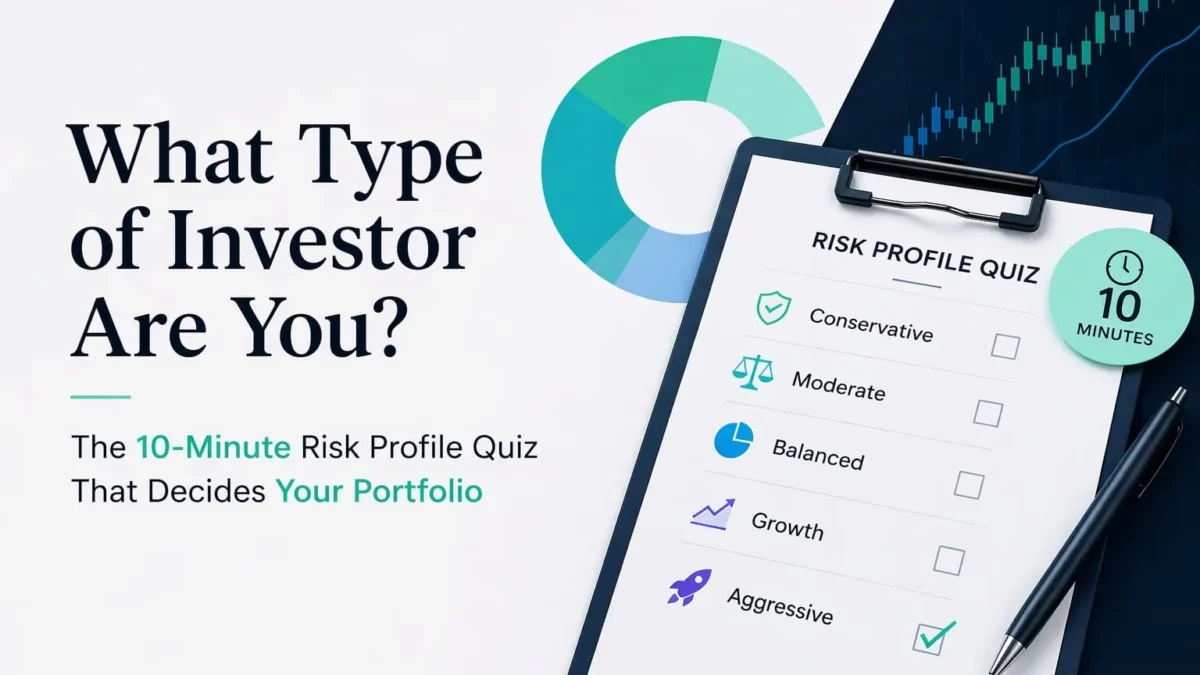
Every serious investor assessment framework lands on some variation of four profiles. Some platforms slice it into five or seven, but the core distinctions are the same. Here's the honest summary:

ProfileExpected Annual ReturnTypical Max DrawdownStock AllocationWho it fits
Conservative4–6%5–10%20–30%Capital preservation, short horizon, low emotional tolerance
Moderate6–10%10–20%50–70%Balanced growth, 5–10 year horizon, accepts moderate swings
Dynamic10–13%20–30%80–90%Growth-focused, 10+ year horizon, tolerates big drops
Aggressive12–18% (high variance)30–45%95%+ stocks & active systemsLong horizon, experienced, thrives under volatility

Two things to notice in that table:

  1. Higher expected return always comes with bigger drawdowns. There is no "high return, low risk" option. If someone offers you one, it's a scam.
  2. The right profile isn't the one with the highest return. It's the one you can sustain for 10+ years without selling in panic.

Now, the quiz.


The AssetWhisper Risk Profile Quiz (10 questions · ~5 minutes)

Instructions: Answer each question with the option that honestly fits you — not the one you wish fit you. Write down the number of points next to each answer. Add them up at the end.


Question 1 — Time Horizon

When do you realistically expect to use this money?


Question 2 — Reaction to a Drop

Your portfolio drops 25% in a single month. What do you actually do?


Question 3 — Age

How old are you?


Question 4 — Income Stability

How would you describe your monthly income?


Question 5 — Dependents

Who depends on your income?


Question 6 — Investment Experience

What's your prior experience with investing?


Question 7 — Primary Goal

What's your main objective for this money?


Question 8 — Portfolio Concentration

Of your total net worth (savings + property + investments), what percentage does this money represent?


Question 9 — Handling Market News

You read the headline: "Global markets crashed 40% this week." Your first reaction is...


Question 10 — Past Emotional Response

Think back to a time you watched an investment, savings account, or even your home value decline. How did you actually feel?


Score yourself

Add up your total points (minimum 10, maximum 40) and find your profile below:

TotalYour Profile
10–17Conservative Investor
18–25Moderate Investor
26–33Dynamic Investor
34–40Aggressive Investor

Profile 1 — The Conservative Investor (10–17 points)

What this profile really means

You value stability over speed. You'd rather preserve what you have and grow it slowly than risk what you've built. You likely have short time horizons, significant financial dependents, or a low emotional tolerance for watching balances fluctuate — or all three. This is not weakness. It's an honest self-assessment, and it's the foundation for the right portfolio for you.

Target portfolio structure

Strategic priorities

Your portfolio should lean heavily on assets that generate stable income and have low correlation to stock market swings. Dividend investing is particularly valuable for conservative profiles because it produces cash flow regardless of short-term price movements. Similarly, exposure to crisis-resilient sectors — utilities, consumer staples, healthcare — should form the equity core of your allocation.

What to avoid

Individual growth stocks, concentrated sector bets, cryptocurrencies beyond token amounts, options strategies, and any system promising double-digit monthly returns. If your portfolio is built correctly for your profile, you should rarely lose sleep over it — because you shouldn't.

Your next step with AssetWhisper

Our Conservative Portfolio is designed specifically for capital-preservation investors with some growth objective. It combines bond ETFs, defensive equities, and dividend-focused positions with automatic rebalancing. See the full allocation on the returns dashboard →


Profile 2 — The Moderate Investor (18–25 points)

What this profile really means

You're the most common investor type — and arguably the one with the best risk-return balance across a lifetime. You want meaningful growth but you're honest about the fact that watching a 40% drawdown would be genuinely painful. You have a medium-to-long time horizon and reasonable income stability. This profile is what most people who invest thoughtfully land on.

Target portfolio structure

Strategic priorities

Diversification is your superpower. A true moderate portfolio isn't "safer stocks" — it's genuinely diversified across asset classes that respond differently to different market conditions. Our detailed guide on how to manage risk in financial investments goes deep on the mechanics of this, and many of its principles are built directly into automated moderate portfolios.

You should also pay attention to how interest rates influence your investments, since the bond component of your portfolio is directly sensitive to rate cycles — something that matters a lot in 2026's macro environment.

What to avoid

Overweighting any single theme (AI stocks, crypto, real estate). Trying to "tactically time" rotations between sectors. Listening to financial media and reshuffling your allocation every quarter. Your portfolio should feel mostly boring. If it feels thrilling, something's probably wrong.

Your next step with AssetWhisper

Our Balanced Portfolio matches this profile precisely — a diversified global allocation with automated rebalancing, low costs, and the option to layer in a modest tactical component for investors who want slightly more alpha. Compare the historical performance here →


Profile 3 — The Dynamic Investor (26–33 points)

What this profile really means

You understand that time horizon is your biggest asset. You're young enough, secure enough, or simply mentally equipped enough to watch your portfolio drop 25%+ and not flinch. You're building long-term wealth with a 10+ year view, and you're willing to accept short-term pain for materially higher long-term gains.

Target portfolio structure

Strategic priorities

At this profile, you can benefit from tilting toward sectors with structural growth tailwinds. Our analysis of the best AI-focused ETFs and top sustainable investing ETFs identifies the specific instruments worth considering for dynamic portfolios.

Dynamic investors are also well-suited to combine a passive core with an active satellite — a portion of the portfolio allocated to signal-based or AI-driven trading systems that can enhance returns during specific market conditions. This is exactly the kind of hybrid structure AssetWhisper was built to automate →

What to avoid

Falling in love with individual stocks. Leveraging your positions (margin, leveraged ETFs). Checking your portfolio daily — it will make you trade more, not less. Confusing "dynamic" with "aggressive" and overreaching.

Your next step with AssetWhisper

Our Growth Portfolio plus selective access to our AI-driven signal systems matches this profile well. You get the diversified core for stability and the tactical overlay for higher upside — without having to make execution decisions yourself. Explore dynamic portfolio options →


Profile 4 — The Aggressive Investor (34–40 points)

What this profile really means

You have a long time horizon, stable financial foundations, meaningful experience, and — crucially — the psychological make-up to handle 40% drawdowns without losing your discipline. You know what you're doing. The question isn't whether you can handle risk, but whether you're allocating it intelligently.

Target portfolio structure

Strategic priorities

The biggest mistake aggressive investors make is confusing aggression with lack of structure. Even at this level, you need rules — entry, exit, rebalancing, position sizing. The critical concept is risk-adjusted return, not raw return. Our explainer on the Sharpe ratio covers how professionals actually measure whether a strategy is worth its volatility. Two strategies with the same return but very different Sharpe ratios are not equal — the one with the higher Sharpe is objectively better.

Aggressive profiles also benefit most from effective hedging strategies applied selectively. The goal isn't to avoid losses — it's to cap the worst-case outcomes so that your drawdowns don't force you into a bad decision.

What to avoid

Mistaking aggression for lack of diversification. Putting 80% into a single idea, no matter how convincing the thesis. Using leverage beyond what your emotional discipline can sustain. Chasing performance — rotating into whatever was up last quarter.

Your next step with AssetWhisper

Aggressive investors typically use a combination of our Growth Portfolio and multiple trading systems, including concentrated strategies not suitable for other profiles. See the complete list of available systems →


What if you landed between two profiles?

If your score is right on a boundary — say 17 or 18, or 25 or 26 — read the descriptions of both adjacent profiles carefully. Honestly ask yourself: "Which one describes the version of me that actually exists, not the version I'd like to be?"

In general, when uncertain, pick the more conservative of the two profiles. The cost of being in a portfolio slightly less aggressive than your true risk tolerance is small (a couple of percentage points of annual return). The cost of being in a portfolio more aggressive than your true tolerance is catastrophic — because you'll sell at the worst moment and lock in losses that would have recovered.


Frequently asked questions

How often should I retake this quiz?

Retake it any time a major life event changes your circumstances: marriage, having a child, receiving an inheritance, changing jobs, approaching retirement, health changes. At a minimum, do it once every 2–3 years even without changes. Your profile today may not be your profile in five years.

What if my quiz result doesn't match my intuition?

Trust the quiz over your intuition. Most people overestimate their own risk tolerance in theory and underestimate it in practice. If the quiz says you're moderate but you feel like you should be dynamic, the quiz is probably right — because it's measuring your actual behavior patterns, not your self-image.

Can my profile shift over time?

Yes, and it normally does. Typically investors become slightly more conservative as they age, their assets grow, and their time horizon shortens. But life events matter more than age alone. A 60-year-old with pension income and paid-off assets can be a more aggressive investor than a 35-year-old with a mortgage and three kids.

Does AssetWhisper automatically match me to a portfolio based on this quiz?

Yes. During the account creation process, we run a more detailed version of this assessment and match you to the portfolio structure that aligns with your result. You can still manually adjust it afterward if you want to lean more or less aggressive than the default suggestion.

If I'm a conservative investor, is it even worth investing vs. just keeping money in a high-yield savings account?

Yes, substantially. Even a conservative portfolio at 5% annual return dramatically outpaces HYSA rates over any meaningful time horizon — especially after taxes. A conservative portfolio isn't about chasing returns; it's about not letting inflation silently erode your purchasing power, which is what HYSA returns ultimately do in 2026.


Conclusion: the quiz is only half of it

Knowing your profile is step one. Step two — the step that actually determines whether this helps you — is building a portfolio that matches it and then leaving it alone.

David's problem wasn't the tech stocks. It was that he put himself in a portfolio designed for a profile he didn't have. When the test came, his emotional wiring overrode his strategy, and he locked in losses that would have recovered.

Rachel's advantage wasn't being smarter. It was being honest with herself, and then respecting what she found.

That's the entire game.


The next step

  1. Match your profile to a real portfolio. Based on your quiz result, the corresponding AssetWhisper portfolio is one click away: Explore portfolios by profile →
  2. Check the historical returns of each portfolio type on our returns dashboard.
  3. Create a free account and let the onboarding route you automatically: Start here.

And if you're still not sure where to start, our foundational pieces are the right companions to this one: why saving in cash is the most expensive decision you can make, and how much money you actually need to start investing.

Knowing your profile is powerful. But it only pays off when the profile meets the portfolio. Make that match this week.


AssetWhisper is a financial analysis platform powered by AI and automated investment systems. We do not provide personalized financial advice. Past performance does not guarantee future results. Before investing, evaluate your risk profile and personal goals.

Share this article with someone who's "thinking about getting into investing" — the quiz is the single most useful 10 minutes they can spend before putting a dollar in the market.

Investing wisely is the cornerstone of building substantial wealth, and one of the most effective strategies to achieve this is by identifying undervalued assets. These are investments priced below their intrinsic value, offering the potential for significant returns as the market corrects its mispricing. But how can investors spot these hidden gems and turn them into profitable ventures? Let’s delve into the strategies and insights that can help you maximize your gains by identifying undervalued assets.

Understanding Undervalued Assets

Definition and Importance

Undervalued assets are securities that are trading for less than their perceived intrinsic value. This discrepancy can arise from various factors, including market inefficiencies, temporary setbacks, or broader economic conditions. Recognizing these opportunities allows investors to purchase assets at a discount, positioning themselves for substantial gains when the market adjusts to reflect the asset's true value.

Indicators of Undervaluation

Several indicators can signal that an asset is undervalued. Key among them are financial ratios, such as the Price-to-Earnings (P/E) ratio, which compares a company's current share price to its per-share earnings. A lower P/E ratio might indicate that the stock is undervalued relative to its earnings potential. Additionally, looking at the Price-to-Book (P/B) ratio, which compares a company's market value to its book value, can provide insights into whether the asset is priced appropriately.

Fundamental Analysis vs. Technical Analysis

When identifying undervalued assets, fundamental analysis plays a crucial role. Unlike technical analysis, which focuses on price movements and trading volumes, fundamental analysis examines a company's financial health, including its revenue, earnings, future growth potential, and overall economic conditions. For a deeper understanding of these methodologies, you might explore our article on Technical Analysis vs. Fundamental Analysis: Which Is Better?.

Strategies to Identify Undervalued Assets

Financial Ratios and Metrics

Using financial ratios and metrics is a foundational strategy in identifying undervalued assets. The Sharpe Ratio, for instance, measures the performance of an investment compared to a risk-free asset, after adjusting for its risk. A higher Sharpe Ratio indicates better risk-adjusted returns. To understand more about how this ratio works, check out our detailed guide on The Sharpe Ratio: Its History, Applications, and Calculations in Financial Markets.

Market Sentiment and Behavioral Finance

Market sentiment plays a significant role in asset valuation. Sometimes, negative news or broader market pessimism can drive prices below their intrinsic values. Understanding behavioral finance helps investors recognize how emotions and cognitive biases can lead to mispricing. Our article on Behavioral Finance: How Emotions Affect Investment Decisions delves into these psychological factors and how they influence market behavior.

Sector Analysis and Emerging Technologies

Analyzing specific sectors and staying abreast of emerging technologies can uncover undervalued opportunities. Sectors undergoing transformation due to technological advancements often present undervalued assets as the market hasn't fully priced in their growth potential. Explore more about the latest trends in Emerging Technologies in Financial Trading to identify sectors ripe for investment.

Maximizing Your Gains from Undervalued Assets

Risk Management Techniques

Investing in undervalued assets isn't without risks. Effective risk management is essential to protect your investments and maximize returns. Techniques such as diversification, setting stop-loss orders, and regular portfolio rebalancing can mitigate potential losses. For comprehensive strategies on managing investment risks, refer to How to Manage Risk in Your Financial Investments.

Diversification with ETFs and REITs

Diversifying your portfolio with ETFs (Exchange-Traded Funds) and REITs (Real Estate Investment Trusts) can enhance your investment strategy. ETFs offer exposure to a wide range of assets, reducing individual investment risk, while REITs provide income from real estate investments. Learn more about sustainable investment options in our articles on Top ETFs for Sustainable and Green Sector Investments and Real Estate Investment Trusts (REITs): Generating Income from Real Estate.

Leveraging Advanced Tools and AI

The integration of Artificial Intelligence (AI) in investment strategies has revolutionized how investors identify undervalued assets. AI-powered tools can analyze vast amounts of data quickly, uncovering patterns and insights that might be missed by traditional methods. Additionally, robo-advisors offer automated, algorithm-driven financial planning services with minimal human intervention. Discover how AI is shaping the future of investing in Artificial Intelligence ETFs: Your Gateway to the AI Revolution in 2024 and The Rise of Robo-Advisors: Why They Are Highly Recommended.

“The stock market is filled with individuals who know the price of everything, but the value of nothing.” – Philip Fisher

Common Mistakes to Avoid

Overlooking Fundamentals

One of the most common mistakes investors make is overlooking the fundamental health of an asset. Focusing solely on price movements without understanding the underlying financials can lead to poor investment decisions. To avoid this, always conduct thorough fundamental analysis, as discussed in Common Mistakes in Stock Market Investing.

Ignoring Market Trends

Ignoring broader market trends can result in missed opportunities or unexpected losses. For instance, changes in interest rates can significantly impact investment choices and asset valuations. Stay informed about economic indicators by reading The Impact of Interest Rates on Investment Choices.

Emotional Investing

Allowing emotions to drive investment decisions, such as panic selling during market downturns or exuberant buying during rallies, can be detrimental. Emotional investing often leads to buying high and selling low, which is the opposite of a profitable strategy. Understanding and mitigating these emotions is crucial, as explored in Behavioral Finance: How Emotions Affect Investment Decisions.

Enhancing Your Investment Strategy

Building a Successful Investor Mindset

Developing the right investor mindset is pivotal for long-term success. This involves patience, discipline, and a continuous quest for knowledge. By cultivating these traits, you can better navigate the complexities of the financial markets. For tips on shaping your mindset, refer to How to Develop a Successful Investor Mindset.

Exploring Alternative Investments

Beyond traditional stocks and bonds, exploring alternative investments like cryptocurrencies and cannabis can offer high returns. However, these assets come with their own set of risks and require diligent research. Gain insights into these emerging investment avenues in Investing in Cannabis: A Complete Guide for 2024 and Initial Coin Offering (ICO): Revolutionizing Business Financing.

Utilizing Investment Hedging Strategies

Hedging is a strategy used to offset potential losses in an investment portfolio. By employing effective hedging techniques, investors can protect their gains and minimize risks associated with market volatility. Learn more about hedging strategies in Effective Strategies for Investment Hedging.

Staying Ahead with Continuous Learning

The financial markets are dynamic, and staying ahead requires continuous learning and adaptation. Regularly updating your knowledge on market trends, new investment tools, and emerging sectors ensures that you can identify undervalued assets effectively. Engage with comprehensive resources like How Asset Whisper Can Transform Your Investment Portfolio to enhance your investment strategy.

By diligently applying these strategies and avoiding common pitfalls, you can successfully identify undervalued assets and maximize your investment gains. Embrace a disciplined approach, leverage advanced tools, and continuously educate yourself to navigate the ever-evolving financial landscape with confidence and insight.

Investing in the financial market can seem daunting, but with the right approach and knowledge, it can be a rewarding venture. This guide on "How to invest in the financial market the right way" will walk you through the essential steps and strategies to make informed investment decisions and achieve your financial goals.

Introduction

Investing in the financial market is a powerful tool for building wealth, but it requires a clear understanding of the market dynamics and a disciplined approach. If you're wondering how to invest in the financial market the right way, you're in the right place. This guide aims to demystify the process and provide you with practical tips to navigate the market successfully.

Understanding the Financial Market

What is the Financial Market?

The financial market encompasses a wide range of platforms where people buy and sell financial securities, commodities, and other fungible items of value at low transaction costs. These include stock markets, bond markets, forex markets, and more.

Why Invest in the Financial Market?

Investing in the financial market offers several benefits:

How to Start Investing in the Financial Market

1. Define Your Investment Goals

Before diving into the market, it's crucial to have clear investment goals. Are you saving for retirement, a down payment on a house, or building an emergency fund? Defining your goals will help determine your investment strategy and risk tolerance.

2. Educate Yourself

Knowledge is power when it comes to investing. Learn about different types of investments, market terminology, and investment strategies. There are numerous resources available online, including courses, webinars, and articles from reputable sources.

3. Choose the Right Investment Account

Selecting the appropriate investment account is essential. Options include:

4. Develop a Diversified Portfolio

Diversification is key to managing risk. A well-diversified portfolio includes a mix of asset classes such as stocks, bonds, and real estate. Diversification helps mitigate the impact of poor performance in any single investment.

5. Regularly Review and Rebalance Your Portfolio

The financial market is dynamic, and your investment portfolio should reflect your current goals and market conditions. Regularly reviewing and rebalancing your portfolio ensures it stays aligned with your investment strategy.

Investment Strategies for Success

1. Dollar-Cost Averaging

Dollar-cost averaging involves regularly investing a fixed amount of money, regardless of market conditions. This strategy reduces the impact of market volatility and lowers the average cost per share over time.

2. Value Investing

Value investing focuses on buying undervalued stocks with strong fundamentals. Investors look for companies trading below their intrinsic value, with the potential for growth.

3. Growth Investing

Growth investing targets companies expected to grow at an above-average rate compared to other companies. These investments might not offer immediate returns but have the potential for substantial long-term gains.

4. Dividend Investing

Dividend investing involves buying stocks that pay regular dividends. This strategy provides a steady income stream and can be particularly appealing for retirees.

Managing Risks in the Financial Market

1. Understand Your Risk Tolerance

Your risk tolerance depends on your financial situation, investment goals, and personality. Assessing your risk tolerance helps you choose investments that match your comfort level.

2. Stay Informed

Keeping up with market trends, economic indicators, and company news helps you make informed investment decisions. Subscribe to financial news outlets and consider using financial analysis tools.

3. Avoid Emotional Investing

Emotional investing, driven by fear or greed, can lead to poor decision-making. Stick to your investment strategy and avoid making impulsive moves based on short-term market fluctuations.

Conclusion

Investing in the financial market the right way involves a combination of education, strategy, and discipline. By defining your goals, diversifying your portfolio, and staying informed, you can navigate the market with confidence. Remember, investing is a long-term journey, and patience is key to achieving your financial objectives.

Introduction

Behavioral finance is a field of study that combines psychology and economics to understand how emotional and psychological biases can influence investment decisions. Often, investors believe their decisions are rational and based on logical analysis, but emotions and cognitive biases can have a significant impact. This article explores these biases, strategies investors can develop to mitigate them, and how algorithmic trading can be a valuable tool in this process.

Common Emotional and Psychological Biases

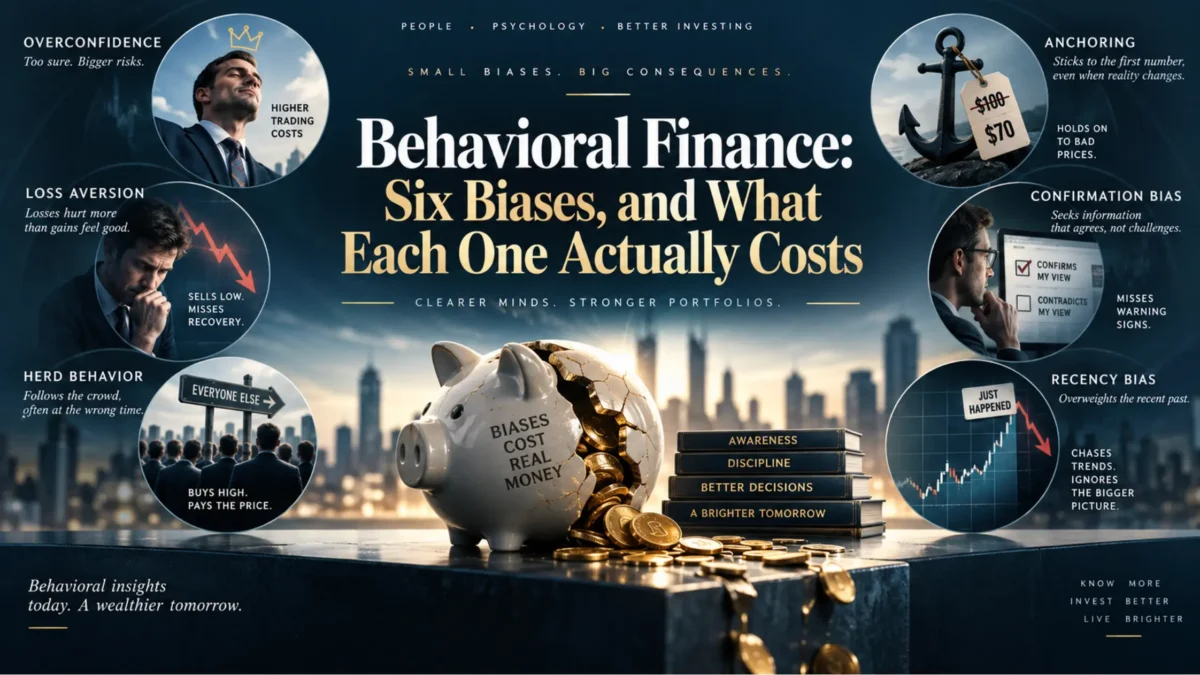
  1. Confirmation Bias: Investors tend to seek information that confirms their preexisting beliefs and ignore data that contradicts them. This bias can lead to skewed investment decisions and an overestimation of one's abilities.
  2. Overconfidence: Investors often overestimate their knowledge and skills, leading to unnecessary risks and a lack of portfolio diversification.
  3. Loss Aversion: Investors feel the pain of a loss more intensely than the joy of an equivalent gain. This can lead to holding on to losing investments for too long, hoping they will recover, rather than accepting the loss and reinvesting in more promising opportunities.
  4. Anchoring Effect: Investors may anchor to a specific reference price (such as the purchase price of a stock) and make decisions based on that reference, rather than the current market value.
  5. Availability Bias: Investors tend to overestimate the likelihood of events based on their mental availability or the ease with which they can recall recent examples, leading to an overestimation of market volatility.

Strategies to Mitigate Biases

  1. Education and Awareness: Understanding emotional and psychological biases is the first step to mitigating them. Recognizing when these biases may be influencing decisions can help reduce their impact.
  2. Discipline and Planning: Developing and adhering to a solid investment plan can help maintain discipline. Establishing clear rules for buying and selling assets and regularly reviewing portfolio performance can reduce the influence of emotions.
  3. Diversification: Diversifying the portfolio can mitigate risk and reduce the impact of emotional decisions. Diversification ensures that not all investments are exposed to the same risk.
  4. Professional Consultation: Working with a financial advisor can provide an objective perspective and help avoid impulsive decisions. Advisors can offer guidance based on analysis and data, rather than emotions.

The Role of Algorithmic Trading

Algorithmic trading, or algo-trading, uses algorithms and mathematical models to make investment decisions. This approach can help mitigate emotional and psychological biases in several ways:

  1. Data-Driven Decisions: Algorithms make decisions based on historical data and statistical models, eliminating the influence of human emotions.
  2. Rapid Execution: Algorithmic trading can execute trades at speeds that humans cannot match, taking advantage of market opportunities in real-time without emotional hesitation.
  3. Consistency and Discipline: Algorithms follow predefined rules and can execute strategies consistently, without deviating due to emotional changes or stress.
  4. Automated Diversification: Algorithms can efficiently manage and adjust a diversified portfolio, ensuring investments remain aligned with established objectives and desired risk levels.

Conclusion

Behavioral finance demonstrates that emotions and psychological biases can significantly impact investment decisions. However, by being aware of these biases and developing strategies to mitigate them, investors can make more informed and rational decisions. Algorithmic trading, with its ability to make data-driven decisions and execute trades consistently, offers a powerful tool to minimize the influence of emotions and improve portfolio performance. Ultimately, combining an understanding of behavioral finance with advanced technologies like algorithmic trading can help investors better navigate the complexities of the investment world.

Investing in the stock market can be a powerful way to build wealth over time. However, it comes with its own set of risks and challenges. Even seasoned investors can make mistakes that can significantly impact their returns. Here are some of the most common mistakes in stock market investing and how to avoid them.

1. Lack of Research

One of the most common mistakes investors make is not doing enough research before buying a stock. It's crucial to understand the company's business model, financial health, industry position, and future prospects.

How to Avoid: Always conduct thorough research. Look at financial statements, read earnings reports, and stay updated on industry news. Utilize tools and resources available through financial news websites, stock analysis tools, and investment research reports.

2. Emotional Investing

Emotions can drive investors to make impulsive decisions, such as buying high during market euphoria or selling low during market panic. This behavior can lead to significant losses.

How to Avoid: Develop a solid investment strategy and stick to it. Use a disciplined approach to investing, focusing on long-term goals rather than short-term market fluctuations. Consider automating your investments to avoid making emotional decisions.

3. Overlooking Diversification

Putting all your money into one stock or a single sector can be extremely risky. If that particular stock or sector performs poorly, it can heavily impact your entire portfolio.

How to Avoid: Diversify your investments across different asset classes, sectors, and geographies. This reduces the risk of any single investment significantly impacting your portfolio. Consider investing in mutual funds or ETFs to achieve broader diversification.

4. Ignoring Fees and Expenses

Many investors overlook the impact of fees and expenses associated with buying and selling stocks, managing accounts, and investing in mutual funds or ETFs. These costs can add up and erode your returns over time.

How to Avoid: Pay attention to the fees and expenses associated with your investments. Opt for low-cost investment options and consider the total expense ratio when choosing mutual funds or ETFs.

5. Chasing Performance

Investors often make the mistake of chasing stocks that have recently performed well, assuming that past performance will continue. This can lead to buying overvalued stocks and missing out on undervalued opportunities.

How to Avoid: Focus on the fundamentals of the investments rather than past performance. Look for stocks that are undervalued and have strong growth potential. Avoid making investment decisions based solely on recent performance trends.

6. Failing to Rebalance

Rebalancing your portfolio is essential to maintain your desired asset allocation. As some investments grow faster than others, your portfolio can become unbalanced, increasing risk.

How to Avoid: Regularly review and rebalance your portfolio to maintain your target asset allocation. This involves selling a portion of your well-performing assets and reinvesting in underperforming ones to maintain the desired balance.

7. Market Timing

Trying to predict market movements and time your investments can be incredibly challenging and often leads to poor results. Missing just a few of the market's best days can significantly impact your overall returns.

How to Avoid: Adopt a long-term investment strategy and avoid trying to time the market. Focus on staying invested and making regular contributions to your portfolio. This approach takes advantage of dollar-cost averaging and reduces the impact of market volatility.

8. Not Having an Exit Strategy

Without a clear exit strategy, investors may hold onto losing stocks for too long, hoping they will recover, or sell winning stocks too early, missing out on potential gains.

How to Avoid: Establish clear criteria for when to sell an investment. This can be based on factors such as price targets, changes in fundamentals, or a predetermined holding period. Stick to your exit strategy to make more disciplined investment decisions.

9. Ignoring Tax Implications

Taxes can significantly impact your investment returns, especially if you frequently buy and sell stocks. Not considering the tax implications can lead to unexpected tax bills and reduced net returns.

How to Avoid: Understand the tax implications of your investments. Utilize tax-advantaged accounts, such as IRAs or 401(k)s, to minimize tax liability. Consider holding investments for longer periods to benefit from lower long-term capital gains tax rates.

10. Lack of Patience

Investing is a long-term endeavor, and expecting quick returns can lead to disappointment and poor decision-making. The stock market can be volatile in the short term but has historically provided strong returns over the long term.

How to Avoid: Practice patience and maintain a long-term perspective. Avoid reacting to short-term market movements and focus on your long-term investment goals. Remember that successful investing requires time and persistence.

Conclusion

Avoiding these common mistakes can help you become a more successful investor and build a more robust investment portfolio. By conducting thorough research, maintaining diversification, avoiding emotional decisions, and having a clear strategy, you can navigate the complexities of the stock market more effectively. Always stay informed and adapt your strategy as needed to align with your financial goals.

In the dynamic world of financial investments, staying ahead is essential for maximizing gains and minimizing risks. Asset Whisper, with its innovative AI-based platform, presents itself as an essential tool for any investor looking to transform their portfolio. Here, we explore how Asset Whisper can revolutionize your investment strategy and help you achieve your financial goals.

1. Accurate Buy and Sell Signals

One of the most notable features of Asset Whisper is its ability to generate extremely accurate buy and sell signals. Using advanced algorithms and real-time data analysis, the platform identifies optimal investment opportunities. These signals allow you to make strategic market moves, taking advantage of the best opportunities and avoiding impulsive decisions.

2. Cutting-edge Artificial Intelligence

Asset Whisper stands out for its use of next-generation artificial intelligence. The platform analyzes millions of financial market data points, including historical trends, behavioral patterns, and economic events, to offer detailed predictions and analyses. This processing and analytical capability far exceeds what a human could achieve, providing a significant competitive advantage.

3. Customized Indicators

Every investor has their own strategies and needs. Asset Whisper allows you to create and adjust customized indicators that align with your specific objectives. Whether you prefer short-term, long-term investment strategies, or a combination of both, the platform provides the necessary tools to develop indicators that perfectly match your investment style.

4. Real-time Market Analysis

The ability to access detailed, real-time market analysis is crucial for making informed decisions. Asset Whisper offers reports and predictions based on up-to-date data, helping you better understand market behavior. This information is invaluable for adjusting your investment strategy according to current and future market conditions.

5. Risk Reduction

Investment always involves a level of risk, but Asset Whisper helps minimize it. Using advanced data analysis techniques and identifying trends and patterns, the platform alerts you to potential risks and guides you to make safer decisions. Additionally, the ability to customize your indicators and strategies allows you to adapt your investments to manage risk more effectively.

6. Continuous Education and Support

Asset Whisper not only provides advanced tools but also a wide range of educational resources. From detailed tutorials on how to use the platform to market analysis and investment strategies, Asset Whisper ensures you are always informed and prepared. Moreover, their support team is available to help you with any questions or issues, ensuring you make the most of all the platform's features.

7. Success Stories

Numerous investors have already transformed their portfolios thanks to Asset Whisper. Success stories from clients who have significantly increased their profits and reduced their losses are a testament to the power of this platform. These inspiring stories demonstrate that, with the right tools and knowledge, any investor can achieve their financial goals.

Conclusion

Asset Whisper positions itself as an indispensable tool for any serious investor. With its advanced artificial intelligence, accurate signals, customized indicators, and real-time analysis, the platform provides everything needed to transform your investment portfolio. Whether you are a beginner or an experienced investor, Asset Whisper offers the competitive edge you need to excel in the financial market.

Start harnessing the power of Asset Whisper today and take your investment strategy to the next level. The future of your finances is just a click away!

In today's dynamic financial landscape, cultivating a successful investor mindset isn't just an advantage—it's a necessity. Whether you're navigating volatile markets, exploring new investment opportunities, or building long-term wealth, your psychological approach to investing often determines your success more than any single strategy or tool. This comprehensive guide explores the essential mental frameworks, practical strategies, and proven techniques that separate successful investors from the rest.

The Foundation: Why Mindset Matters More Than Ever

Before diving into specific strategies, it's crucial to understand that investing success is 80% psychology and 20% mechanics. The most sophisticated analysis tools and strategies fail without the proper mental framework to execute them consistently. In an era where market information travels at the speed of light and volatility can strike without warning, your mindset becomes your most valuable asset.

1. Continuous Education: Your Intellectual Investment

Knowledge compounds faster than any financial investment. Successful investors understand that markets evolve, new opportunities emerge, and strategies that worked yesterday may not work tomorrow. This makes continuous learning non-negotiable.

Building Your Knowledge Foundation

Start with the fundamentals. Understanding technical analysis vs fundamental analysis provides the analytical framework for evaluating investments. Master both approaches—technical analysis helps you time entries and exits, while fundamental analysis ensures you're investing in quality assets.

Staying Current with Market Evolution

The investment landscape transforms constantly. From traditional stocks and bonds to cryptocurrencies and NFTs, new asset classes emerge regularly. Subscribe to reputable financial publications, follow market leaders on social media, and participate in investment forums. Consider joining mastermind groups where you can exchange ideas with other serious investors.

Leveraging Technology for Learning

Modern investors have unprecedented access to educational resources. Online courses, webinars, podcasts, and AI-powered tools can accelerate your learning curve. Platforms that combine education with practical application help bridge the gap between theory and practice.

2. Patience and Discipline: The Twin Pillars of Success

Warren Buffett famously said, "The stock market is a device for transferring money from the impatient to the patient." This wisdom encapsulates why patience and discipline form the bedrock of successful investing.

Developing Unshakeable Patience

Patience in investing means:

Maintaining Iron Discipline

Discipline manifests through:

Create written investment rules and review them regularly. When emotions run high, these rules become your anchor, preventing costly impulsive decisions.

3. Strategic Diversification: Building an All-Weather Portfolio

Diversification is your portfolio's insurance policy. However, successful diversification goes beyond simply owning multiple assets—it requires strategic thinking about correlation, risk factors, and market cycles.

Beyond Basic Diversification

True diversification means:

Understanding how to manage risk in your financial investments helps you build a portfolio that can weather various market conditions while still capturing growth opportunities.

Modern Diversification Strategies

Consider emerging opportunities like artificial intelligence ETFs to gain exposure to transformative technologies while maintaining diversification. These instruments offer participation in revolutionary trends without the concentration risk of individual stocks.

4. Advanced Risk Management: Protecting Your Wealth

Risk management separates amateur investors from professionals. It's not about avoiding risk—it's about understanding, quantifying, and managing it intelligently.

The Risk Management Framework

Implement these essential risk management tools:

Understanding Market Risks

Different market conditions require different risk approaches. Learn to identify and adapt to:

5. The Long-Term Perspective: Building Generational Wealth

Successful investors think in decades, not days. This long-term orientation provides multiple advantages:

The Power of Compound Growth

Albert Einstein allegedly called compound interest "the eighth wonder of the world." A 10% annual return doubles your money every 7.2 years. Over 30 years, that initial investment grows over 17-fold. This mathematical reality rewards patient, long-term investors exponentially.

Navigating Market Cycles

Markets move in cycles—understanding this helps maintain perspective during turbulent times. Study historical patterns, but remember that behavioral finance shows how emotions affect investment decisions. Your ability to remain rational when others panic or become euphoric often determines your long-term success.

Building for the Future

Consider long-term trends shaping the investment landscape:

6. Emotional Intelligence: Mastering Your Psychology

Your emotions can be your worst enemy or your greatest ally in investing. Developing emotional intelligence helps you recognize and manage psychological biases that sabotage investment success.

Common Psychological Traps

Avoid these mental pitfalls:

Developing Emotional Resilience

Build emotional strength through:

7. Continuous Evaluation and Adaptation

Markets evolve, and so should your strategies. Regular portfolio evaluation and strategy adaptation ensure continued relevance and effectiveness.

Performance Analysis Beyond Returns

Evaluate your portfolio using multiple metrics:

Adapting to Change

Stay flexible by:

8. Goal Setting: Your Investment North Star

Clear, specific goals provide direction and motivation for your investment journey. Without them, you're sailing without a compass.

The SMART-ER Framework

Enhance traditional SMART goals by making them:

Creating Your Investment Plan

Document your goals, strategies, and rules in a formal investment policy statement. This document becomes your constitution, guiding decisions and maintaining consistency through market cycles.

9. Leveraging Technology and Tools

Modern technology offers unprecedented advantages for individual investors. Understanding and utilizing these tools can significantly enhance your investment outcomes.

Essential Investment Technologies

Embrace these technological advantages:

Platforms like Asset Whisper can transform your investment portfolio by combining artificial intelligence with practical trading signals, making professional-grade analysis accessible to individual investors.

The Data Advantage

In the information age, data is power. Learn to:

10. Building Your Investment Network

No investor succeeds in isolation. Building a strong network accelerates learning, provides opportunities, and offers support during challenging times.

Creating Your Investment Community

Develop relationships with:

Maximizing Network Value

Extract maximum benefit from your network:

Advanced Strategies for the Committed Investor

Understanding Market Inefficiencies

Markets aren't always efficient, creating opportunities for prepared investors. Learn to identify:

Developing Your Edge

Every successful investor needs an edge—something that gives them an advantage over other market participants. Your edge might be:

Common Pitfalls and How to Avoid Them

Learning from others' mistakes accelerates your journey to investment success. Understanding common mistakes in stock market investing helps you sidestep costly errors that derail many investors' journeys.

The Overtrading Trap

Many investors trade too frequently, eroding returns through:

The Paralysis Problem

Conversely, some investors become paralyzed by analysis, missing opportunities while seeking perfect information. Remember:

The Path Forward: Your Investment Journey

Developing a successful investor mindset is a journey, not a destination. Markets evolve, new opportunities emerge, and your own circumstances change. The key is maintaining a growth mindset—staying curious, adaptable, and committed to continuous improvement.

Your Next Steps

  1. Assess your current mindset: Identify strengths and areas for improvement
  2. Create your investment policy statement: Document goals, strategies, and rules
  3. Develop your education plan: Schedule regular learning time
  4. Build your network: Join investment communities and find mentors
  5. Start small and scale: Begin with manageable positions while learning
  6. Track and review: Monitor decisions and outcomes for continuous improvement
  7. Embrace the journey: Enjoy the process of growing as an investor

Conclusion: The Mindset Advantage

A successful investor mindset isn't built overnight—it's forged through education, experience, and deliberate practice. By focusing on continuous learning, maintaining discipline, managing emotions, and adapting to change, you position yourself for long-term investment success.

Remember, the greatest investment you can make is in developing your own capabilities. The knowledge, skills, and mental frameworks you build become assets that compound over time, generating returns far beyond any single investment.

Your mindset shapes your decisions, your decisions shape your results, and your results shape your financial future. Invest in developing the right mindset, and watch as it transforms not just your portfolio, but your entire approach to wealth creation.

The market rewards those who combine knowledge with discipline, patience with action, and confidence with humility. Develop these qualities, maintain your commitment to growth, and you'll find that investment success becomes not just possible, but inevitable.


Ready to accelerate your investment journey? Explore how modern tools and strategies can enhance your investment outcomes. The combination of the right mindset and the right resources creates a powerful formula for financial success.